Past Event: Oden Institute & Dept. of Mathematics
Digital Twins: Contributions of SciML/AI and challenges
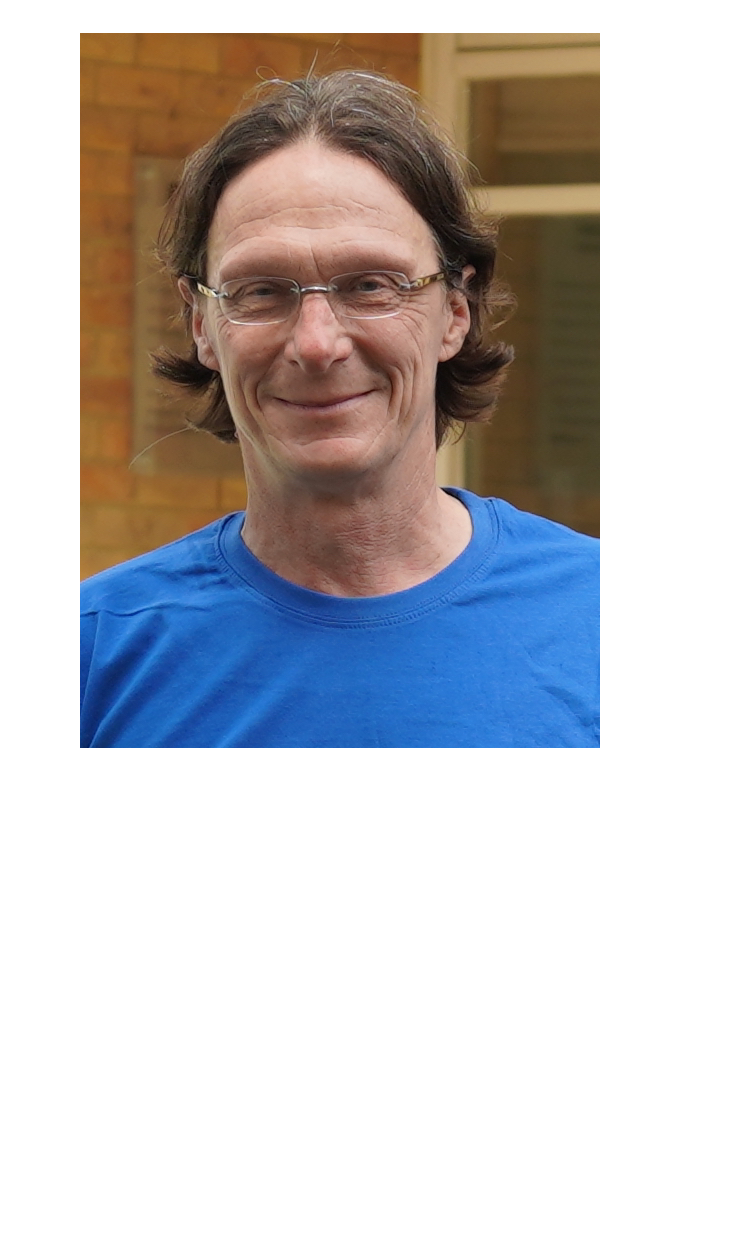
Sebastian Reich, Professor, University of Potsdam
3:30 – 5PM
Tuesday Feb 10, 2026
POB 6.304 and Zoom
Abstract
Digital twins constitute a major computational innovation to the field of computational mathematics with manifold applications in the natural sciences, engineering, and medicine. Digital twins involve a virtual representation in the form of a computational model and an online bidirectional flow of information between the virtual and the physical. This setting poses extreme challenges to predictive modelling, data assimilation, optimal control, experimental design, uncertainty quantification, and decision making, which require a tight interplay between physics-based and data-driven approaches. In my talk, I will first review what I perceive as some of the key points for interactions between SciML/AI and the field of digital twins. I will then highlight some of my own contributions to data-driven generative modelling, data assimilation and stochastic optimal control. The talk will close with an outlook on future contributions of SciML/AI to digital twins on the one hand and future challenges for SciML/AI arising from applications to digital twins on the other.
Biography
Sebastian Reich earned his PhD in electrical engineering from the Technical University Dresden in 1991 and his habilitation in mathematics from Freie Universität Berlin in 1998. Before becoming professor at the University of Potsdam in 2004, he was lecturer at the University of Surrey, reader and professor at Imperial College London, where he still serves an honorary visiting professor. SIAM awarded him its Dahlquist Prize in 2003. He is a SIAM Fellow Class 2019 and Editor-in-Chief of SIAM/ASA Journal on Uncertainty Quantification since 2021. At the University of Potsdam, he initiated the DFG-funded Collaborative Research Centre, SFB 1294, on Data Assimilation. He has been the spokesperson of the centre from 2017-2024. The centre involves 13 research projects at the interface of mathematics, statistics, machine learning and applications from the geosciences, cognitive sciences, biophysics, and pharmacology and is now in its third and final funding period.
Event information
Tuesday Feb 10, 2026